
If you’re reading this, something about your roof has probably been bugging you. Maybe a brown ring showed up on the bedroom ceiling. Maybe a few shingles ended up in the flower bed after last week’s wind. Or maybe you just bought the house and nobody can tell you how old the roof is. Whatever brought you here, the question underneath is the same: do you need roof replacement.
We’d love to give you a one-line answer, but nobody honest can do that without climbing up and looking. What we can do is explain how we think about it when we inspect roofs in Grove City, Columbus, Hilliard and the neighborhoods around them, so you know what to watch for.
How Old Is the Roof, Really?
Age is where we start, mostly because it changes how we read everything else. A typical asphalt shingle roof gives you somewhere around 20 to 30 years. Some go longer. Plenty don’t, especially when the attic runs hot or the original install was rushed.
A ten-year-old roof with one bad spot? Fix the spot. A twenty-two-year-old roof with a bad spot, a second one starting near the chimney, and shingles that look tired everywhere else? You’d be paying to patch something that has already clocked out.
No idea how old yours is? Dig out your closing paperwork, ask the neighbors who had their roofs done around the same time, or check for a permit record. If none of that pans out, a roof inspection will get you a decent estimate. Shingles show their age in ways we can read pretty quickly.
When a Repair Is All You Need
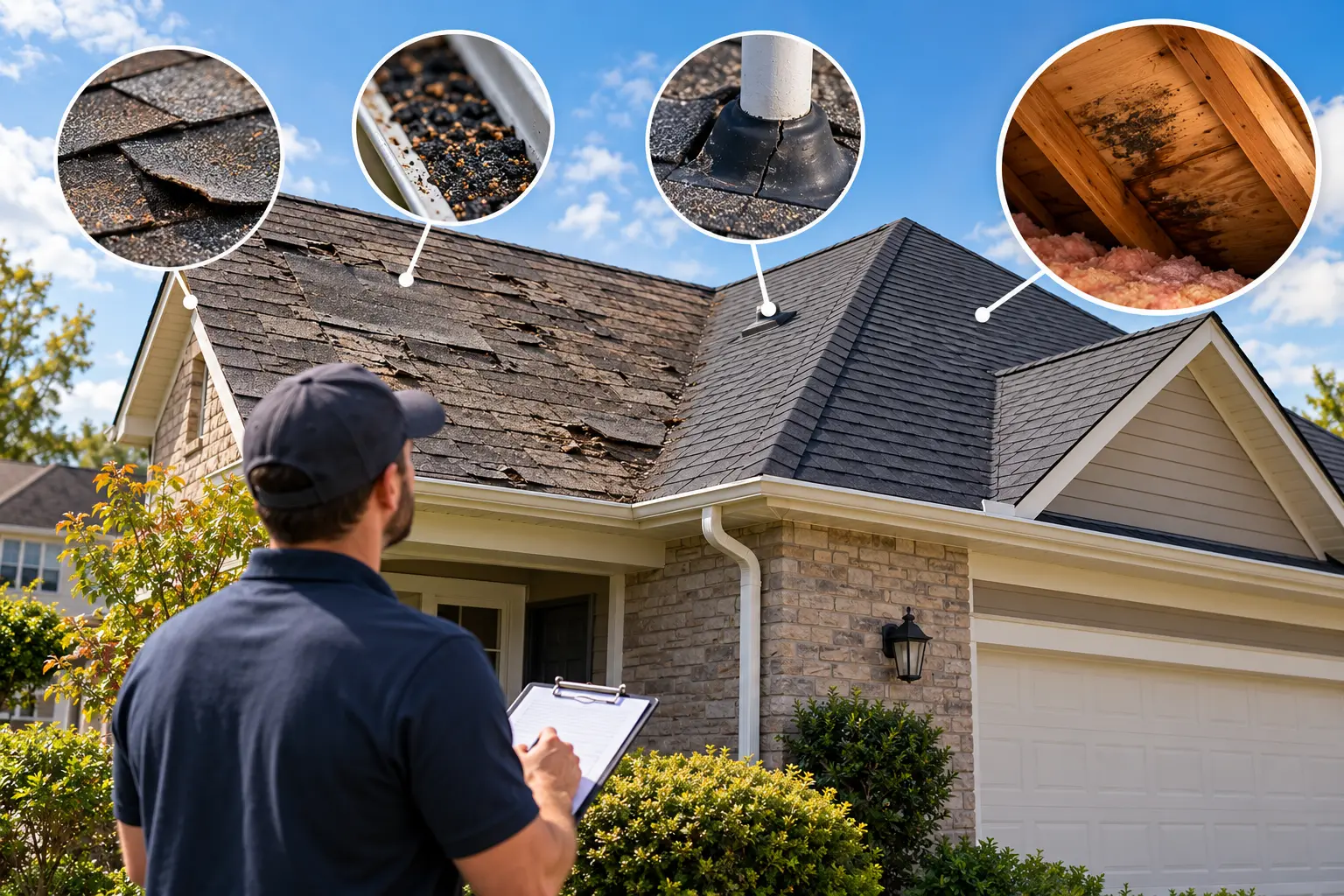
Repairs are the right call when the trouble is small and the rest of the roof is solid. A handful of shingles lifted by wind. A cracked rubber boot around a plumbing vent. Flashing that’s pulled loose by the chimney. All fixable, and a good roof repair can buy a healthy roof plenty more years.
What matters is whether the problem is isolated. If the shingles around it are still flat, flexible and sealed down, you’re probably in good shape. Some of the leaks we get called about turn out to be nothing more than a worn pipe boot. Nobody needed a new roof. They needed one small part replaced the right way.
Signs It’s Time to Replace
Then there are roofs where repairing is just kicking the can down the road. Start with your gutters. If you see a pile of what looks like coarse dark sand at the bottom of a downspout, those are granules coming off your shingles, and once enough of them are gone the shingles lose their protection from the sun.
Been patching the same corner every other year? That’s your answer right there. A sag or dip in the roofline is worse. It usually means the wood underneath has been soaked for a while, and that one can’t wait.
One more that people miss: go up in the attic on a bright day and switch off the light. If you can see pinpoints of daylight through the roof boards, water can get in just as easily.
If a few of those sound familiar, it’s probably time to price out a full roof replacement instead of throwing more money at patches.
What Ohio Weather Does to Shingles
Roofs take a beating here. Muggy summers, fast-moving storms, hail every so often, a few heavy snows. But the real damage comes from winter’s back-and-forth: freezing at night, thawing by lunch, week after week from December into March.
Picture a hairline gap in a shingle. Water slips in, freezes and swells overnight, then melts. Repeat that fifty times and you’ve got a leak. Ice dams pile on: warm air leaking from the house melts the snow, the runoff hits the cold eave and freezes, and the next batch of meltwater has nowhere to go but under the shingles.
So a roof around here tends to wear out sooner than the number on the shingle packaging suggests. It’s also why we’d say a quick look after a hard winter or a big storm is worth it, even if nothing seems wrong.
Don’t Forget the Attic
Some of the best clues aren’t on the roof. Take a flashlight up there on a dry day and look for dark stains on the underside of the decking, insulation that’s damp or squashed flat, a musty smell, rusty nail tips poking through, or mildew.
People underrate ventilation. A stuffy attic in July cooks the shingles from below, and in winter the trapped moisture goes to work on the wood. If it feels like a sauna up there, tell whoever’s inspecting.
Did one specific storm do this? Then your insurance company may get a say, and things get more complicated.
Our advice is simple: get the roof checked soon after a big storm, take photos, and write down the date. Our storm restoration team works with your insurance company and documents what we find. We’ve been through claims that dragged on for months, including one for a multi-building property, and we stick with it until the work is done.
We can’t promise what an insurer will approve, and nobody honest can. What we can do is show you exactly what’s up there.
Frequently Asked Questions
So Which One Is It?
If the roof is fairly young and the problem is local, repair it. If it’s past 20 years old and showing wear in several places, or the same leak keeps coming back, replace it. If you’ve got sagging or soft spots, get someone out quickly, because that’s usually a replacement job. After a major storm, it comes down to how many slopes took damage and what your claim covers.
What a Decent Inspection Looks Like
A good inspection isn’t someone squinting at your roof from the driveway. We go slope by slope, check the flashing around chimneys and vents, look at the gutters and drip edge, and get into the attic when we can. You should come away understanding what’s going on, ideally with photos in hand and a couple of options that fit your budget.
How long does a replacement take?
Often a day or two for a typical home. Weather and roof complexity can stretch that, and we’ll tell you what to expect before we start.
Can new shingles go over the old ones?
Sometimes, on paper. We usually prefer a full tear-off so we can see the deck, fix hidden damage and start with a flat surface.
Does every leak mean a new roof?
No. Lots of leaks come from worn flashing or a cracked pipe boot. The hard part is tracing the water, because the stain on your ceiling is often nowhere near where it’s getting in.
When should I replace a roof in Ohio?
Late spring through early fall is easiest, but a roof that’s leaking in January shouldn’t wait for May.
Want a Straight Answer About Your Roof?
Sublime Roofing is a locally owned, insured company based in Grove City. We offer free inspections and estimates, explain things in plain language, and we won’t try to sell you a bigger job than your roof needs.
Call us at (614) 918-0018 or request your free estimate online. You’ll find us at 6256 Seeds Rd, Grove City, OH 43123.
We also serve Columbus, Hilliard, Galloway, Groveport, Bexley and Upper Arlington.